

Table of contents
🤖
AI-generated summary
Garmin is back in force with the new Forerunner 970. Out with MIP screens, in with AMOLED, next-generation health sensors, and a whole load of features for demanding athletes. But is it a simple evolution or a real revolution? Spoiler: a bit of both.
🆕 What Actually Changed
The Forerunner 970 is a 965++, but not just on the surface. Garmin has rethought quite a few elements, particularly on the sensor and interface side:
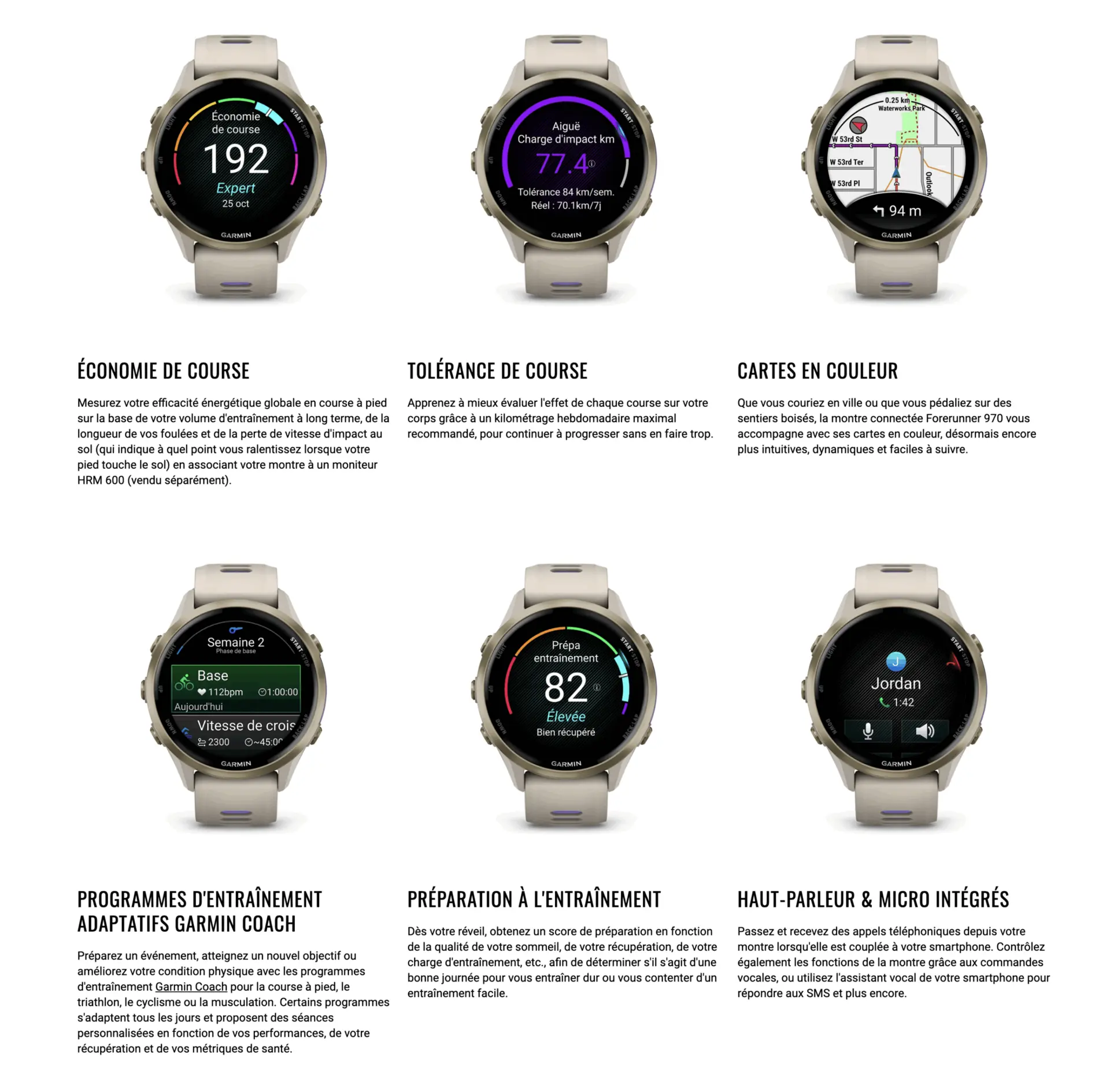
- Built-in mic and speaker: useful for voice feedback, or even listening to a podcast without headphones (yes, it can come in handy).
- Elevate Gen 5 sensor: ECG, overnight body temperature, respiratory tracking… Garmin puts health front and center, and it’s not just a gimmick.
- Bright AMOLED display: goodbye mediocre readability, hello colors that pop. Even in sunlight, it looks great.
- Sapphire glass and titanium: durability + premium look. This is closer to a Fenix than a regular Forerunner.
- Built-in LED flashlight: already seen on Fenix/Epix, but always handy (early morning runs or late-night returns…).
- New health/performance widgets: “Running Economy” and “Running Tolerance” to train smarter and avoid injuries.
- Built-in triathlon training plan: this is the first time Garmin has offered this natively on a Forerunner.
🔋 Battery Life: Not (Yet) Its Strong Point
Let’s be clear — AMOLED looks great, but it drains power. Even with Garmin’s good optimization, the 970 lasts less than MIP models:
- In always-on mode, battery drains fast.
- To hit Garmin’s promised runtime, you’ll need to lower the brightness… but then you lose readability.
- In my experience, the watch was showing 5 days once fully charged. Far from the 8 days Garmin advertises!
- If you compare the 970’s price to a Fenix 8, I tend to favor the Fenix 8’s battery life.
- Not a disaster, but worth considering depending on your sport (long trail, ultra? Look elsewhere).
🎯 Who Is This Watch For?
👉 Ideal if:
- You do triathlon, or multisport with detailed health tracking.
- You’re coming from a Forerunner 945 or older.
- The ECG, flashlight, and AMOLED display appeal to you.
🚫 Not essential if:
- You have a recent Forerunner 965.
- You don’t use health widgets or the voice assistant.
- Battery life matters more to you than aesthetics or features.
💭 My Take
Garmin is moving its Forerunner lineup toward something more premium. You can feel it in the materials, the health features, the overall approach. The 970 isn’t a technical revolution, but it’s a deliberate step up-market.
Given the asking price of €750, you can seriously consider the Fenix 8, available for around a hundred euros more. It offers superior battery life and an even more premium finish, making it a very compelling alternative for those who prioritize ruggedness and endurance above all else.