
Table of contents
🤖
AI-generated summary
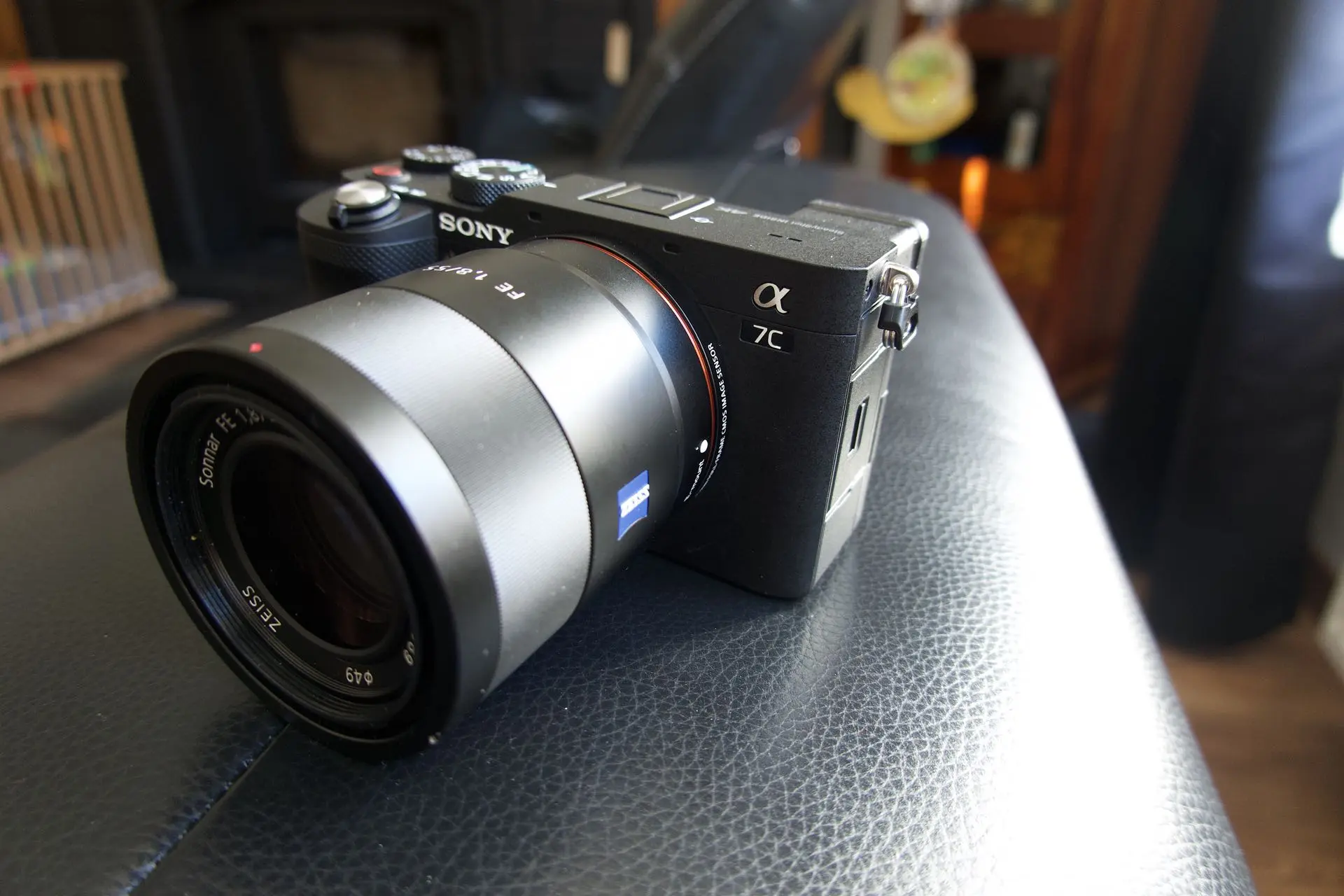
Sony releases a new body in 2020 — still with those unpronounceable names — this one called the A7C, let’s say the “C” stands for compact. This body essentially takes the A7 III’s feature set and squeezes it into a smaller, lighter package.

In 2013 when I bought the Sony A7R I wanted to replace my big A77 body with something more compact; it was an extraordinary camera at the time, a full-frame body smaller than an APS-C. Then the A7 lineup evolved and the body gradually put on weight. The size grew when they added in-body stabilisation, and so did the weight.
After my stint with the Leica Q, I had my first body with the viewfinder on the left rather than in the centre. Once I’d got used to that layout, going back to a centred finder was tough — your nose hits the screen every time, it’s not natural at all. I really struggled to readjust to the viewfinder on the Sony A7 III. On top of that, I find a centre-mounted viewfinder ugly, uncomfortable, and it adds bulk to the camera with that hump right in the middle.

So when Sony announces the world’s smallest and lightest full-frame with a left-positioned viewfinder, I’m over the moon 👼. Sony goes back to basics: top-tier performance in an ultra-compact body. Sure, in the reviews, most of the complaints come down to the price, and all the limitations listed are a direct consequence of that compactness. But personally, I’m willing to make quite a few sacrifices to have a camera this compact.
The body is almost as compact as the Leica Q — at least it has USB charging built in 😅.

What I love 😍 about this body beyond its size and weight is the new tilting screen that — just like the Leica M10-D — can be closed completely.

There’s something special about shooting through the viewfinder only, without pausing to check each shot on an external screen. Unlike the Leica M10-D though, you don’t have to wait until you’re at your computer to see the results — for the impatient among us, just flip the screen around 😂 (or look in the viewfinder).

The screen also lets you take selfies or shoot video with instant feedback 🥰.

Finally, to wrap up on this tilting screen: it’s not perfect, and taking a photo using only the screen it’s not perfect and requires an extra step compared to the old one in order to shoot in landscape with the camera pointing down. In that case you have to fully open the screen and then orient it.

On the regrets side: Sony still can’t make desirable objects — everything they make is ugly… This body is no exception; it’s admittedly more restrained than the other A7 bodies, but it doesn’t exactly set your heart racing.
Take the shutter button, for instance — it’s grey on an all-black camera. Find the error.
Just look at the latest Fujifilm XE4
— it’s absolutely gorgeous.
In conclusion, I love this body, as you’ve probably gathered. If you’re looking, like me, for the most ultra-compact interchangeable-lens full-frame camera out there, nothing comes close. Pair it with a 100-gram Zeiss 35mm f/2.8 and the whole thing weighs just 600 grams on the scales!